












We all know South Walton is a fishing paradise, but for those of us not going out on a charter, or fishing the emerald green surf, there is another option that is exciting, rewarding, and good eating. North of the Choctawhatchee Bay are the lakes, big and small, filled with opportunity. Almost every fisherman got their start on a pond somewhere, catching bream. It is a great way to start a life long habit. The weather is getting cooler and youth under 16 do not need a license, so now is the perfect time to take your kids fishing, or just let them go by themselves. Sometimes small opportunities lead to large opportunities.

Large opportunity is usually largemouth bass, Micropterus nigracans, Florida’s favorite freshwater fish. Bass eat fish, insects, and crustaceans and are fun to catch. They are aggressive and put up a fight. They also hang around bream because they like to eat them.
Juniper Lake and Lake Defuniak are great places to fish, but so are the small lakes spread throughout the area, like the ponds on the south east side of Second Street.
Garrion Gay, age eight, fished a 2nd Street lake one day and it worked well for him. People think they need lots of fancy stuff to catch big fish, but Garrion went to the pond with a pole and bread. No worms or lures? No problem. . He scrunched up a ball of bread, put it on his hook and threw it out there. He caught a bream.
Bream are panfish
Bream are popular panfish and bread is a good bait for them. In the wild they eat crickets, smaller fish, insect larva like dragonfly larva, and water bugs, but they like bread. They breed during summer and the males defend the nests, so males tend to bite at anything, which is good for catching them.
Limits
The bag limit for any black bass, which includes largemouth, Florida, and Choctaw, is five and only one can be more than 16 inches. The limit for panfish, including blue gill, bream, and sunfish is 50.
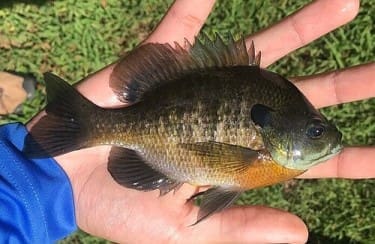
Garrion could have taken that bream home and fried it up with cornmeal, or onions and hot sauce, but he figured he could do better. Bream are kind of small, and being a knowledgeable fisherman, Garrion knew that bream are prey for bass. He must have had a pretty good teacher if he knew all that by eight years old, but he also was very resourceful, as fishermen usually are. No need for fancy boats and a suitcase full of lures, Garrion had a plan.
Bream as bait for bass
Bass are big and aggressive, and Garrion knew he could get one. He hooked his bream so it could swim sort of naturally and cast. Bass are opportunistic feeders, and they hang around with bream in the ponds doing the predator prey thing. The bream keeps enough distance to not get eaten until the bass sees an opportunity and the bream is lunch. This works a bit better for bass when the bream is hooked.
Smart thinking, patience, and a lot of practice resulted in a memorable achievement for Garrion, and his family as well. Fishing is more than catching a fish. It is an experience in self reliance, problem solving, and planning. Learning how to fish is one of those things that stays with you for a lifetime, like riding a bike, or playing a musical instrument.
I am grateful that here in the Panhandle of Florida we can teach our children skills they can be proud of. The next catch may not be this big, but it will still be a catch. Good job Garrion, and your family as well.