




























Walk into almost any major retailer right now and you’ll see the same pattern: racks packed tight, new collections already replacing last month’s inventory, markdown signs quietly preparing for the next cycle. The system depends on constant turnover. More product. Faster releases. Shorter relevance.
That model works in cities built on trend velocity. It doesn’t feel right on 30A.
This coastline moves differently. The light changes daily, but the landscape remains. The dunes don’t reinvent themselves every month, and Western Lake doesn’t rebrand each season. There’s a steadiness here — a quiet consistency — and it makes you question why everything else has to move so quickly.
Fast fashion has conditioned us to expect constant novelty. Weekly drops. Micro-trends. Clothing produced in such large quantities that disposal is factored into the business model. When something fades, stretches, or falls out of style, replacing it feels easier than keeping it.
But speed carries a cost.
Not only environmentally, but culturally. It shifts how we value what we wear. When garments are built to be temporary, our attachment to them becomes temporary too.
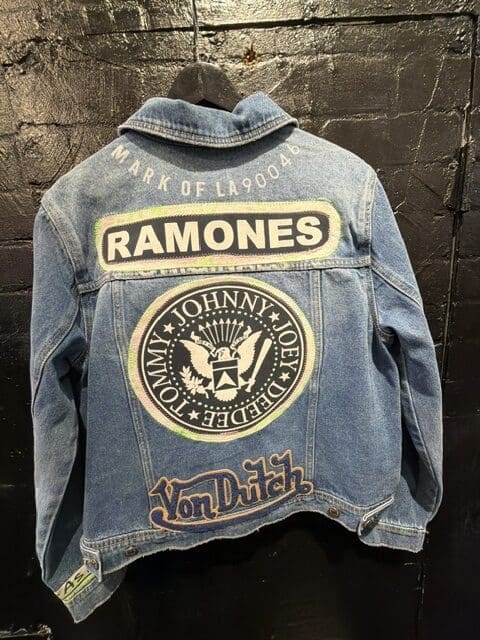
There’s a difference between buying something because it’s inexpensive and buying something because it feels right. One fills space. The other earns it.
Along 30A, where lifestyle is deeply tied to place, that distinction matters.
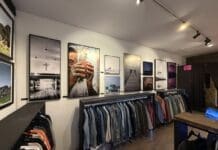
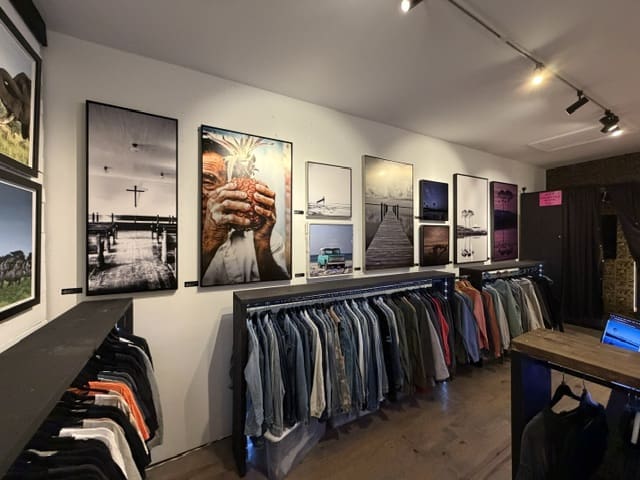
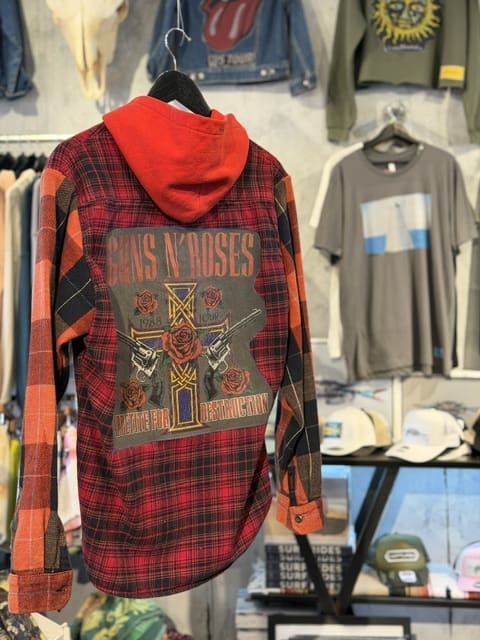
At Captured Clothing 30A, we’ve tried to avoid the fast-fashion, mass-produced approach as much as we can. Not because it sounds good in marketing language, but because it doesn’t align with how we want to operate. Producing in limited runs forces discipline. When quantities are smaller, decisions carry more weight. Fabric selection matters. Construction matters. Fit matters. You consider whether a piece will still feel relevant next season — not just next week.
It also requires accepting that when something sells out, it may stay sold out.
That isn’t about scarcity as a tactic. It’s about restraint as a principle. It keeps creativity honest and prevents excess from quietly stacking up in back rooms and landfills. It allows space for evolution instead of overproduction.
Spring on the coast reinforces that philosophy. The season isn’t about excess — it’s about refinement. A well-constructed layer for cool mornings. A sweatshirt that holds its shape after exposure to salt air and sun. Colors that feel drawn from the shoreline rather than pulled from a corporate forecast.
Quality reveals itself over time. Stitching that doesn’t twist. Fabric that softens instead of thinning. Structure that endures beyond a single season.
Well-made clothing doesn’t demand attention. It earns loyalty.
Sustainability is often presented through bold claims and certifications, but sometimes it’s simpler than that. Sometimes it’s choosing to produce less. Resisting the urge to overstock. Being comfortable selling through instead of marking down. Designing pieces meant to be worn repeatedly, not photographed once and forgotten.
In a community that depends on the health of its environment, restraint isn’t abstract. Our dunes, our rare coastal lakes, and our shoreline exist because someone chose preservation over expansion. Because someone understood that more isn’t always better.
Clothing can follow the same philosophy.
As both a retailer and a photographer, I’m drawn to what endures. The same stretch of water looks different every day, but it never loses its identity. That thinking shapes our Modus Made pieces — smaller releases, thoughtful construction, and designs intended to outlive a single season.
Authenticity doesn’t happen by accident. It requires intention. It requires the willingness to produce differently, even when speed would be easier.
If we want authenticity — in our communities, in our businesses, in what we wear — we have to initiate it.
We have to choose better over more. Quality over quantity. Longevity over immediacy.
The Gulf doesn’t compete. It endures.
What we create, and what we choose to wear, can do the same.