











By Helen Petre
Monarchs (Danaus plexippus) are everyone’s favorite butterfly and for good reason. There are a lot of them, they are easy to identify, and they have this amazing migration that everyone knows about. Besides flying hundreds of miles and only eating milkweed, monarchs are having a hard time, even though everyone loves them and tries to help them. Therein might lie the problem. We humans do not always understand how to help nonhumans.
People try to catch monarchs and raise them. This sounds fun, but it is not fun for the monarch. Just like you do not want to be put in a cage and have organisms watch while you go through your life stages, monarchs do not particularly enjoy it either. Humans also tend to think they should go to the store and buy milkweed. That sounds like a good idea, but stores are businesses that make money. They sell anything you will buy. Stores sell non-native and invasive plants, and for the most part, are not aware that they are doing this.
Migration
Historically, monarchs east of the Rocky Mountains migrate through the panhandle on their way to winter in Mexico, but some deviate from that path and winter in south Florida. Can you blame them? Humans do that too. Are they staying for the nice weather? Maybe.
Some people think that monarchs are staying because we Floridians buy tropical milkweed (Asclepias curassavica), a nonnative milkweed that blooms all year.
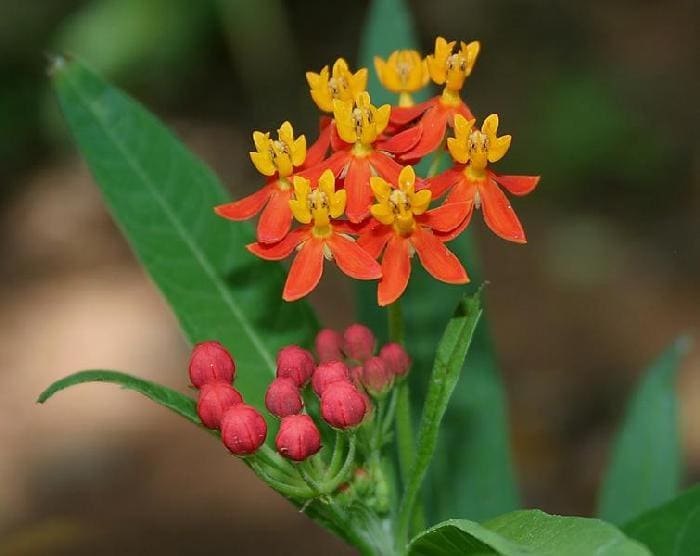
Tropical milkweed is sold at stores and is treated with insecticides in the greenhouses where it is grown. Monarchs are insects. Insecticide kills insects. This is not good.
OE (Ophryocystis electroscirrha)
Tropical milkweed increases the incidence of a monarch protozoan parasite we call OE. Adults carry this parasite, and adult butterflies leave some infected spores on milkweed plants, as they feed and lay eggs. If monarchs migrate, they move on. If they stay, and they are infected, they stay infected, and so do all the other butterflies and newly hatched offspring that visit the same plant.
OE was originally discovered in Florida around 1960. Spores of the protozoa are on the infected monarch’s scales, especially on the abdomen. When the monarch feeds, or lays eggs, the spores get stuck onto the milkweed and the next monarch that lands to lay eggs becomes infected. Often the offspring that hatch and eat, ingest the spores. Infected monarchs look like this:
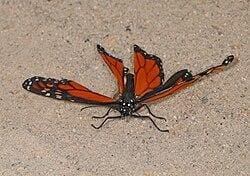
Thus, infected monarchs cannot migrate, or fly, or mate, and will die.
Xerces
I recently started a monarch project with FWC and Xerces. I have learned a lot, and I am having tons of fun. We catch monarchs, use tape to collect scales from the monarch abdomen, and look at them under a microscope to identify OE. OE is not good for Florida monarchs, and there is more of it here than I would like to admit.
Nectar plants
Monarchs need milkweed, but it is the caterpillars that eat the milkweed. Native milkweeds are hard to find in stores. In order to help monarchs, it is much more effective to buy, transplant, or just let grow, some native nectar plants. Adult butterflies need energy for their trip, and they get this in the form of sugar, or nectar, from flowers.
For our Xerces project, we look for milkweed, but to find adults, we look for thistles (Cirsium horridulum). Thistles are spiny, but they are native, and provide excellent food for bees, butterflies, and birds. Thistles are the favorite nectar source for monarchs.
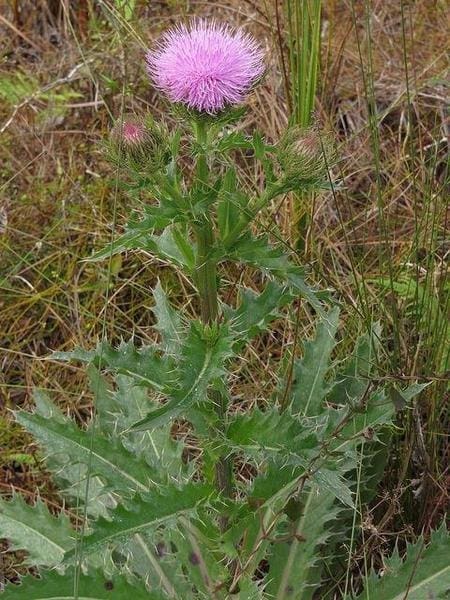
To help monarchs, plant nectar plants: Liatris species, Bidens species, asters, frostweed, goldenrod, and mistflower. Plant native plants that have evolved over thousands of years with monarchs. Native plants do not need fertilizer, pesticides, or even water. Just buy, or plant, native nectar plants, like the ones you see growing in fields, and recently burned areas.
Is it just because we are buying tropical milkweed that monarchs are infected with OE? Probably not. None the less, it is never a good idea to buy nonnative plants and expect native results.
Native milkweed
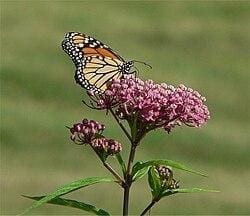
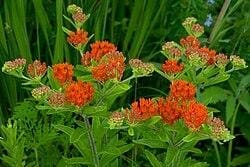
Butterfly weed (Asclepias tuberosa) is a common, orange, native milkweed that blooms in fall. In the beach dunes, pink swamp milkweed (A. incarnata) blooms in summer. Everyone loves monarchs, and it is easier than you think to help them. Do nothing. Let nature plant native plants, and monarchs will come. Enjoy your native plants without pesticides, herbicides, mowing, and fertilizers, and enjoy your native pollinators.
Helen Petre is a retired biologist. If you have any questions or suggestions for articles, please email: petrehelen@gmail.com.