








SS United States Moves Closer to Becoming the World’s Largest Artificial Reef
A legend of the sea is preparing for its next great voyage—this time beneath the waves of the Gulf.
In January, representatives from Coastal Conservation Association Florida, Visit Destin-Fort Walton Beach and Okaloosa County took part in an exclusive inspection of the iconic SS United States, marking a major milestone in the ship’s transformation into what will become the world’s largest artificial reef.
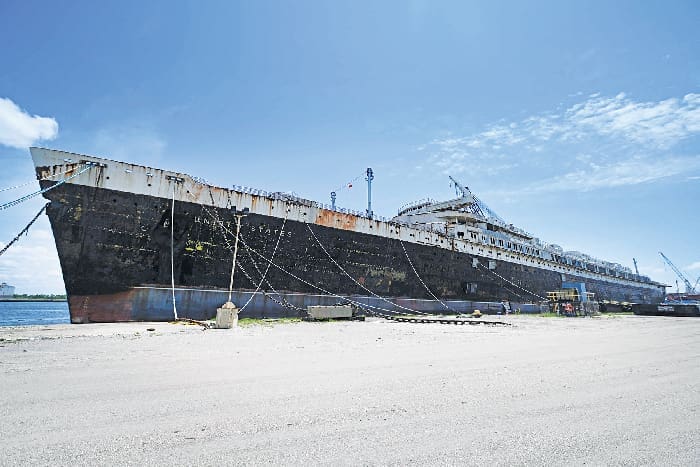
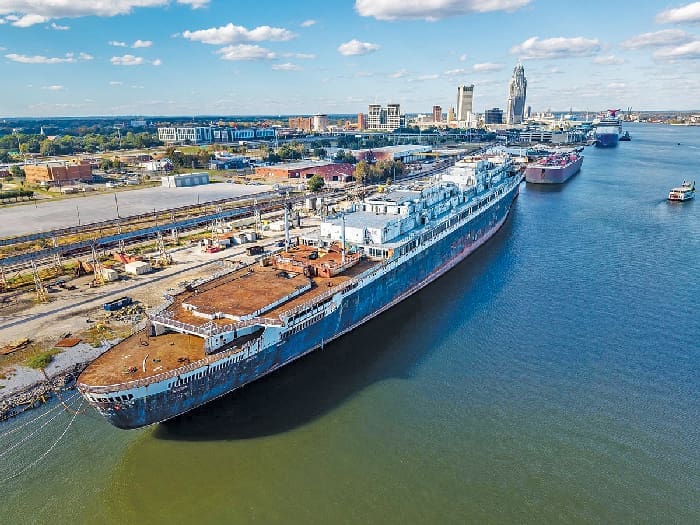
The legendary 990-foot ocean liner—once the fastest passenger ship to ever cross the Atlantic—is currently docked in Mobile, Ala., where crews are completing extensive cleaning and preparation work to ensure the vessel is environmentally safe for deployment. When the work is finished, the SS United States will be placed in the Gulf approximately 22 nautical miles southwest of the Destin East Pass and 32 nautical miles southeast of the Pensacola Pass, creating a monumental new underwater habitat off the Emerald Coast.
For conservationists, anglers, divers and history lovers alike, the project represents something truly unprecedented.
CCA Florida has committed $500,000 toward the effort, helping transform the historic vessel into a thriving marine ecosystem that will benefit fish populations and fisheries access for generations. Once deployed this spring, the SS United States will officially hold the title of the largest artificial reef in the world.
A Regional Vision with Global Impact
Momentum for the project accelerated in November, when the Okaloosa County Board of County Commissioners unanimously approved agreements formalizing a regional partnership with Visit Pensacola and CCA Florida. The collaboration brings a combined $2 million investment into the project, including a $1.5 million contribution from Visit Pensacola and CCA Florida’s historic $500,000 donation—the largest single contribution in the organization’s 40-year history.
“I applaud the energy that went into creating these partnerships,” said Okaloosa County Board Chairman Paul Mixon. “This collaboration will foster amazing adventures for generations of visitors and create a tourism economy that will benefit the state and the entire Northwest Florida region.”
Beyond deployment costs, a portion of the funding will support a multi-year marketing campaign positioning the SS United States as a premier, world-class diving destination—further elevating Northwest Florida’s reputation on the global marine tourism map.
“Visit Pensacola is thrilled to partner with Okaloosa County on this historic initiative. With the addition of the SS United States and Pensacola already home to the USS Oriskany, Northwest Florida is becoming one of the world’s most extraordinary destinations for divers and marine exploration,” said Visit Pensacola President and CEO Darien Schaefer.
Conservation, Tourism and Stewardship
At its core, the SS United States project is about more than scale—it is about stewardship.
“The transformation of the SS United States into the world’s largest artificial reef creates a rare opportunity to elevate our entire region on the global stage,” said Brian Gorski, executive director of CCA Florida. “Together, we’re bringing unmatched environmental value to the Gulf while creating new tourism and economic opportunities that will benefit our destinations for generations.”
Gorski noted that the partnership builds on CCA Florida’s long-standing collaboration with Okaloosa County on artificial reef projects and redfish stock enhancement, demonstrating how public agencies and nonprofit organizations can work together to strengthen marine ecosystems.
“This project is particularly meaningful,” he said, “as it represents the largest single donation in CCA Florida’s 40-year history. It is truly a once-in-a-lifetime opportunity to contribute to the creation of the world’s largest artificial reef.”
What Comes Next
The SS United States remains in the inspection and remediation phase in Mobile following months of preparation to meet strict environmental standards. Deployment is scheduled for early this year, weather and final approvals permitting.
Once submerged, the massive structure will quickly begin attracting marine life, creating new habitat, expanding fishing opportunities and offering divers a once-in-a-generation experience—an underwater monument where American maritime history meets Gulf Coast conservation.
For Northwest Florida, the sinking of the SS United States won’t mark an ending, but a bold new beginning—one that anchors the region’s future in sustainability, adventure and global distinction.